|
K-Dense Updates// September 24, 2026 |
|
This week: Introducing Faraday, an AI co-scientist on your bench, and two free tools for kickstarting your research, both built on Jev. |
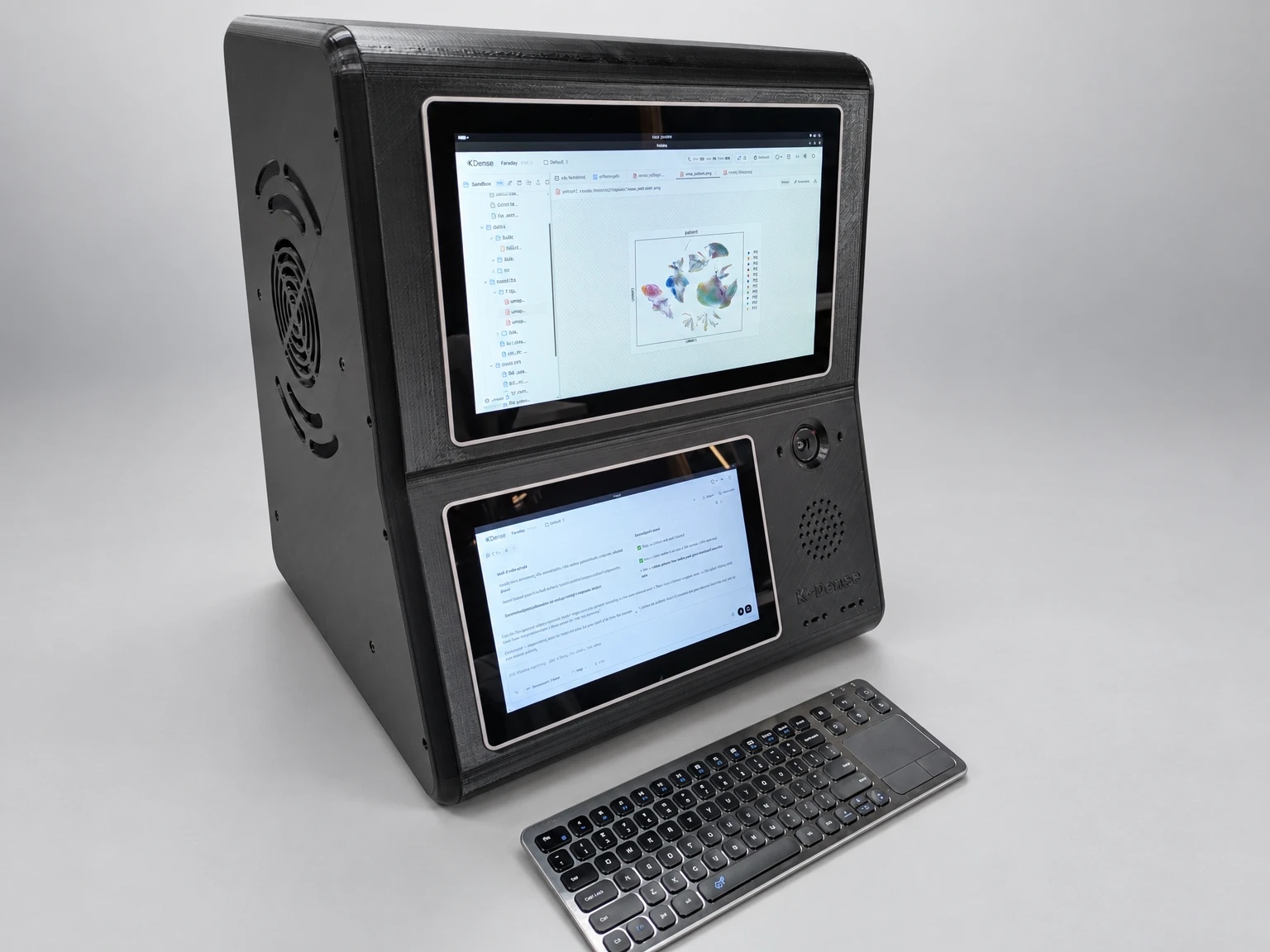
>Faraday: An AI Co-Scientist on Your BenchFaraday is an AI co-scientist built into a benchtop instrument. It analyzes your data, reads the literature, and writes up the methods on hardware in your lab. It runs models locally, screens every outbound request through the sovereignty gate, and sends nothing to a frontier model without your approval.
|
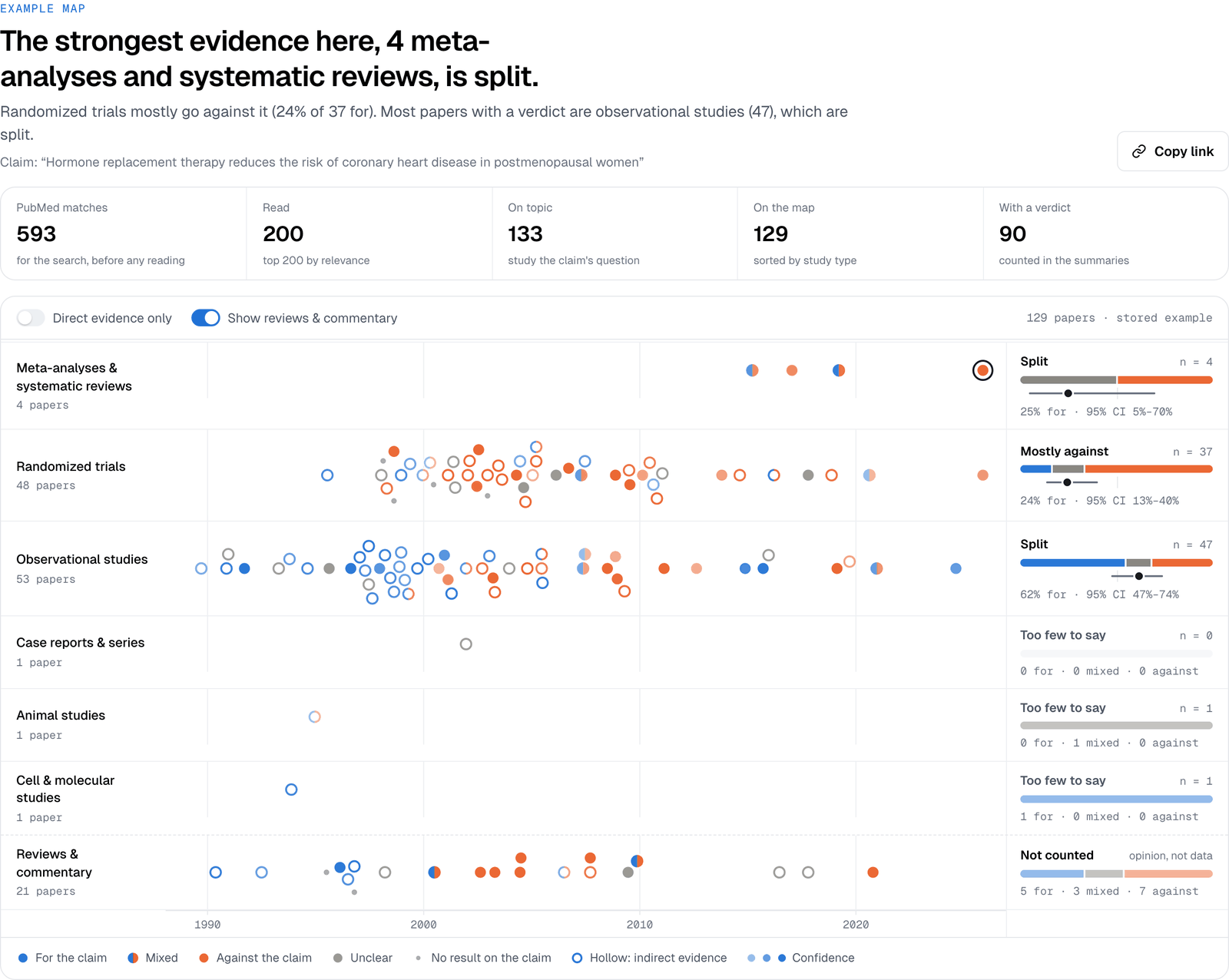
>Claimscape: Where the Literature StandsType a claim and it maps the most relevant PubMed abstracts by study design and year. On the claim that hormone therapy reduces heart disease, 24% of randomized trials support it. Every dot opens the sentence behind the verdict.
|
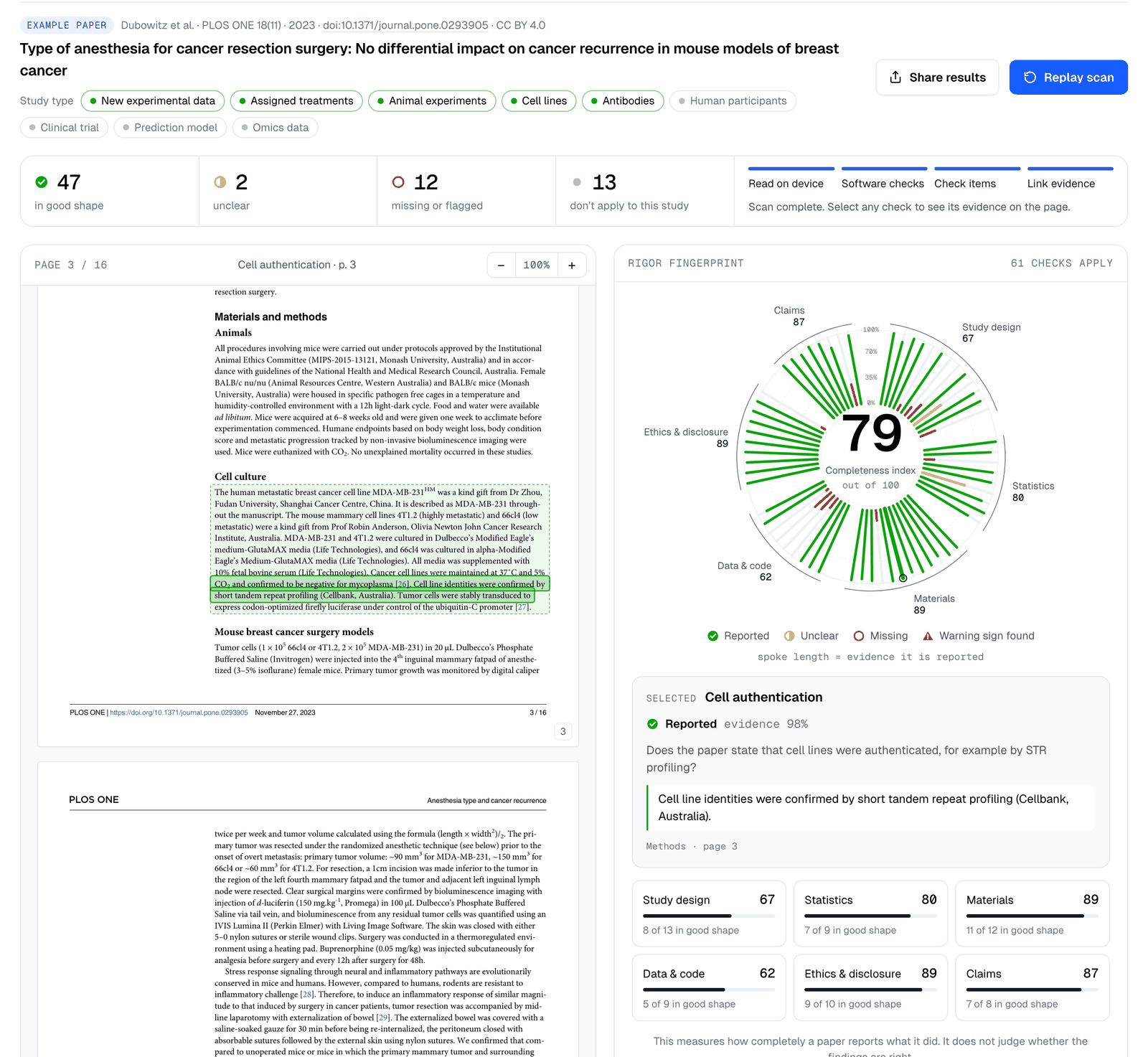
>Rigor Scan: A Reporting Check for Any PaperDrop in a PDF and it runs 74 reporting checks, each tied to a sentence in the paper. The file stays in your browser. The example paper scores 79 for how completely it reports what it did. Both Rigor Scan and Claimscape are completely free, with no login required.
|
>Follow Us |
|
Until next week, The K-Dense Team |


|
||
|