What this research found
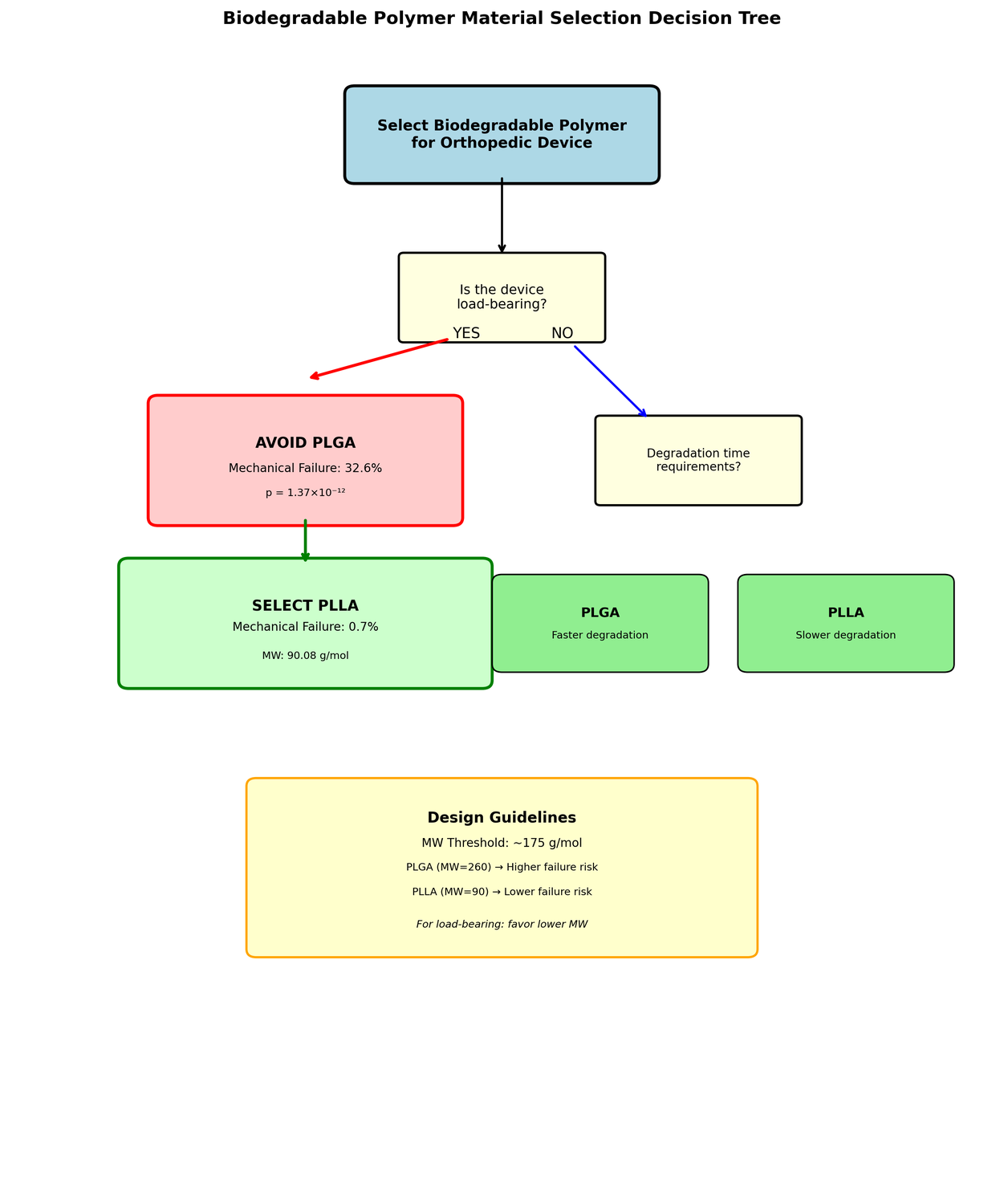
Wound scaffolds made from gelatin methacryloyl (GelMA) can be crosslinked lightly or heavily, and the choice changes how immune cells respond to the implant. A published single-cell atlas of mouse wounds filled with lightly and heavily crosslinked GelMA was reanalyzed and scored against engineering criteria to decide which formulation to carry into the next in vivo experiment. The recommendation is an intermediate material present in neither arm of the original study — a storage modulus of roughly 600 to 800 Pa and a degradation half-life near 14 days — which took the top rank on the decision matrix.
- The untested intermediate formulation topped the scored decision matrix at 27 out of 30 (mean 4.50), ahead of lightly crosslinked GelMA at 19 (3.17), heavily crosslinked GelMA at 14 (2.33), and the sham wound at 11 (1.83).
- Heavy crosslinking amplifies a pro-inflammatory and pro-fibrotic response. Bootstrap intervals that exclude zero place Il1b expression 0.478 higher in heavily crosslinked scaffolds than in sham wounds (95% CI 0.240 to 0.733), and the fibroblast contractile marker Acta2 0.534 higher than in lightly crosslinked scaffolds (95% CI 0.391 to 0.684).
- Neutrophils are enriched in heavily crosslinked scaffolds relative to sham wounds, at a log2 fold change of 0.895 with an adjusted p-value of 9.2e-39.
- Cell-type composition does shift across conditions (chi-square = 486.0, df = 12), but the effect size is modest, with a Cramér's V of 0.113, so changes in what cells are doing carry as much of the signal as changes in which cells are present.
- The nominated mechanism is macrophage IL-1 beta and TNF-alpha signaling driving fibroblast Acta2 and Col1a1 expression. Because that link is associational, an in vivo test was specified: the intermediate scaffold with anakinra, an IL-1 receptor antagonist, or etanercept for TNF blockade, against isotype control, reading out fibroblast contractile state and collagen deposition.
How it was done
The published single-cell atlas of mouse wounds implanted with lightly or heavily crosslinked GelMA, alongside sham wounds, was reanalyzed using donor-aware pseudobulk aggregation, differential abundance testing, and an explicit separation of cell-state changes from compositional ones. Macrophage and fibroblast populations were subclustered with a resolution sweep to check that the clusters were stable, and bootstrap confidence intervals were used in place of nominal p-values for the key expression contrasts. Measured material properties were then integrated with the cell-state readouts by principal component analysis, whose first two components carried 56.9% and 43.1% of the variance, and folded into a scored formulation decision matrix. The result is a 19-page report with 11 figures, three tables, and 30 references whose identifiers were checked against Crossref records.
Data sources
- GEO accession GSE248524 — single-cell RNA sequencing of GelMA-implanted mouse wounds
- Butenko et al., Nature Communications 15:6820 (2024) — the anchor study, in female C57BL/6 mice
Limitations
The discovery data comprise a single pooled library per condition, so batch effects cannot be separated from biology, and the material-versus-cell-state correlations rest on three conditions and are treated as descriptive rather than causal. The recommended intermediate formulation is a design target that was never fabricated or measured, and the findings come from mice.
Figures from this analysis
How this research was produced
K-Dense Web planned and ran this biomedical materials investigation end to end — gathering the sources, carrying out the analysis, producing the figures, and drafting the report. The full session transcript, including every intermediate step, is available to view.